






















Custom Crafts Blog
Custom Challenge Coin Pricing: Costs & Mold Fees Explained
Table of Contents


Custom Challenge Coin Pricing Explained: Materials, Mold Fees, and Production Costs
1. Why Custom Challenge Coins Never Have a Fixed Price?
Almost everyone ordering custom challenge coins for the first time asks the same question:
“How much does a custom challenge coin cost?”
It’s a reasonable question.
Unfortunately, it’s also one that rarely has a simple answer.
If you search online, you’ll find prices that range from a few dollars to well over a hundred dollars per coin. In real inquiries, two coins that look very similar can end up with noticeably different final prices. This often causes confusion—and sometimes doubt about how challenge coin pricing really works.
The reality is straightforward:
challenge coins are not standard products.
They are fully customized metal items, made to order. Their cost depends on manufacturing decisions that are not always visible in the final design. To understand custom challenge coin cost, it helps to look at how a coin is actually made.
2.Challenge Coins as Manufacturing Projects
From the factory’s point of view, a challenge coin is not just a souvenir.
It is a small manufacturing project.
Before production starts, engineers evaluate issues such as:
- How metal will flow inside the mold
- Whether line depth and relief levels can be formed consistently
- If the structure allows smooth demolding
- Whether the design can be reproduced reliably in volume
These details rarely appear on design proofs, but they have a direct impact on tooling, production efficiency, and defect rates. This is often why two similar-looking coins can have very different manufacturing costs.
3. Size and Thickness: The First Cost Variable
In any challenge coin cost calculator, size and thickness are always addressed first. This is not accidental.
Larger coins require more metal, weigh more, and take longer to polish and plate. Thicker coins increase forming difficulty and production time.
In practice, 1.5 to 2 inches (38–50 mm) is the most common and cost-effective size range. Once designs go beyond that range, costs tend to rise more quickly than many customers expect.

4. Material Selection and Cost Differences
Zinc Alloy: The Most Common Option
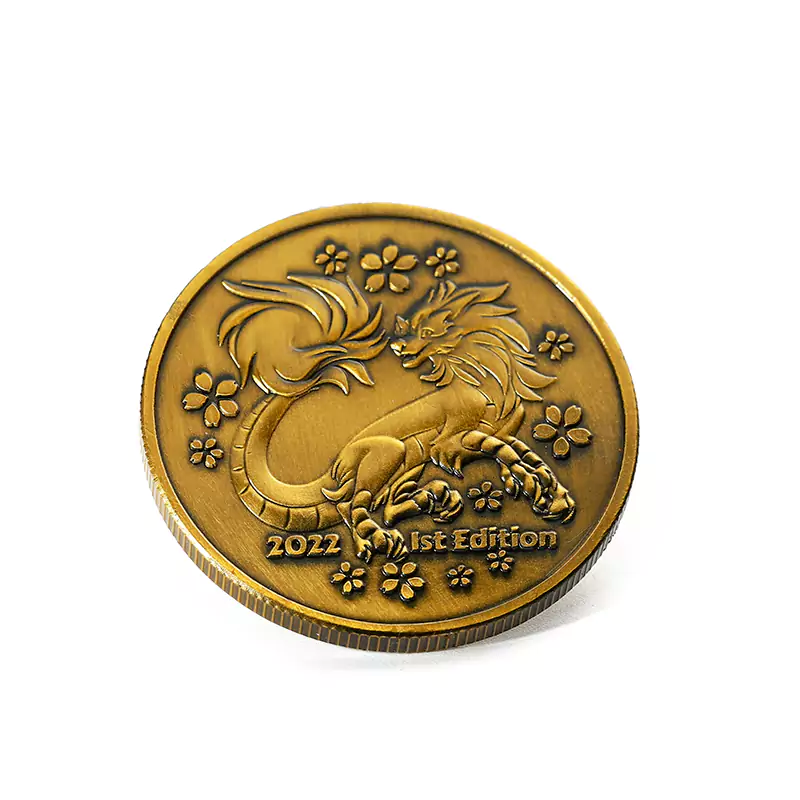
Today, most custom challenge coins are made from zinc alloy. This is not simply because of price.
Zinc alloy flows well during casting and is well suited for detailed designs, layered reliefs, and 3D elements. It allows greater design freedom while maintaining stable production and reasonable weight for international shipping.
For most projects, zinc alloy offers the best overall balance between appearance, durability, and cost.
Brass and Copper: Traditional Feel at a Higher Cost
Brass and copper coins are usually produced by stamping rather than casting. This results in sharper edges and a heavier feel, which is why these materials are often chosen for military or collector-grade coins.
However, stamping requires more manual finishing and causes faster mold wear. For similar designs, brass or copper coins typically cost 30–50% more than zinc alloy versions.
Iron: Low Cost, Limited Use
Iron is sometimes chosen for budget-sensitive projects. While the material itself is inexpensive, it oxidizes easily. If the plating layer is damaged, rust can develop over time.
For challenge coins meant to represent long-term value or recognition, iron is usually not the preferred option.
5. Design Complexity Makes a Bigger Difference Than Many Expect
Design complexity is one of the most underestimated cost factors.
Simple 2D designs are easier to tool and more predictable to produce.
True 3D challenge coins, on the other hand, involve curved surfaces, gradual transitions, and fine sculptural details.
These designs often require CNC engraving, multiple rounds of mold adjustment, and extended testing. Tooling costs can increase significantly, but the finished result usually delivers much stronger visual and tactile impact.
6. Plating and Finishing Processes
Plating is often described as a color choice, but from a production standpoint, it is a technical process.
Bright finishes such as gold or silver emphasize clarity and formality. Antique finishes rely on controlled oxidation and polishing to create depth. Special finishes—such as black nickel, matte effects, or dual plating—require additional steps and stricter quality control.
Because of this, plating plays a larger role in challenge coin price than many buyers initially realize.
7. Enamel Types and Coloring Methods
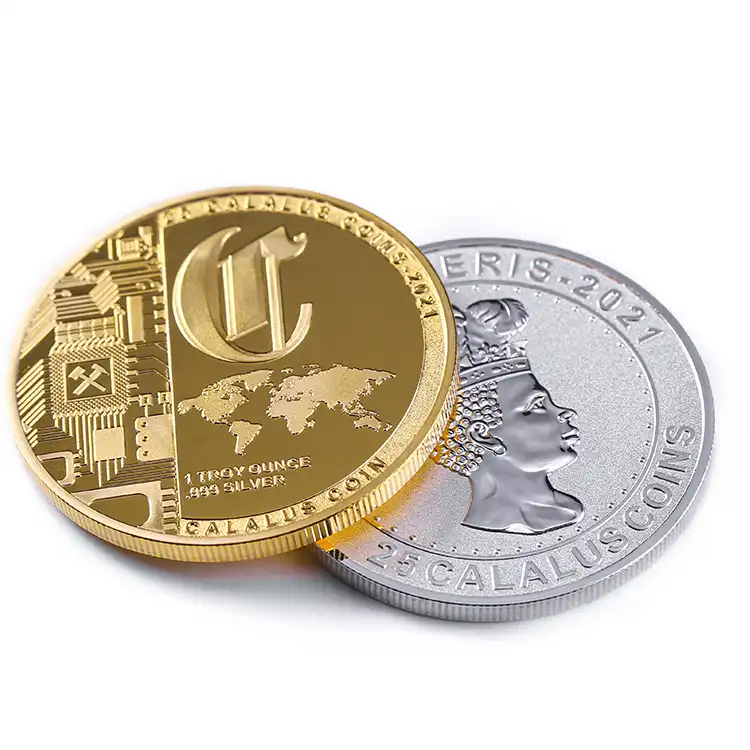
Soft enamel is the most common coloring method. Colors are recessed below raised metal borders, creating strong contrast and a clear tactile feel.
Hard enamel (imitation enamel) is polished flat after firing, resulting in a smooth, glass-like surface. It offers excellent durability, but the additional steps involved increase production cost.

8. Mold Fees and Tooling Investment
Mold fees are sometimes misunderstood as an extra charge. In reality, they are the foundation of custom production.
Once a mold is completed and properly stored, repeat orders typically do not require additional mold fees. As quantities increase, the mold cost is spread across more units, reducing its impact on the per-piece price.
9. Quantity, Unit Cost, and Production Efficiency
Challenge coin pricing follows a clear rule: higher quantities lead to lower unit costs.
Setup, calibration, and inspection costs remain largely the same regardless of order size. As volume increases, these fixed costs are shared across more coins, which is why bulk challenge coin pricing is more competitive.
Packaging and Shipping Considerations
Packaging affects presentation, but it also influences shipping volume and weight.
For international orders, many customers now choose DDP (Delivered Duty Paid) shipping to keep total costs predictable and avoid customs-related complications.
10. Using a Challenge Coin Cost Calculator Effectively
To help customers better understand how different choices affect pricing, we provide an online challenge coin cost calculator:
👉 https://www.hesank.cn/product/challenge-coin-cost-calculator/
The purpose of this tool is not to replace a formal quotation. Instead, it helps users build a realistic budget range, compare material and finish options, and prepare for more efficient discussions.
Complex designs and large-volume orders still benefit from manual evaluation.
11. Final Thoughts: Balancing Budget and Craftsmanship
The value of a challenge coin is not defined by metal alone.
It represents recognition, memory, and identity. Understanding custom challenge coin cost is not about finding the lowest price—it is about making informed decisions that balance budget, design, quantity, and craftsmanship.
That balance is what creates a challenge coin worth keeping.
PRODUCT CATEGORIES
Do you want to have unique metal crafts?
Let's connect ASAP.
We are a professional manufacturer of custom metal crafts, we can create exquisite metal artworks for you according to your needs and preferences.